Showing posts with label healthy. Show all posts

Monday, September 23, 2019

Overnight Oats: A Quick and Healthy Breakfast Solution

By Sydney Anderson
In this day and age with our “go, go, go” lifestyle, it is often a challenge to make nutrition a priority, especially when it comes to eating a healthy breakfast. Among college students and working adults in particular, grabbing something quick to eat for convenience rather than quality has become the norm. However, these “grab-and-go” foods tend to be low in nutritional value while also being high in saturated fat, sodium, and sugar. According to data from the National Health and Nutrition Examination Survey (NHANES), 2001-2002, only 67% of Americans between the ages of 20 and 29 eat breakfast on any given day compared to 80% of the entire population. Furthermore, the most frequently reported breakfast foods and beverages include milk; coffee; ready-to-eat cereals; white breads (71% of all breads consumed), bagels, rolls, and English muffins; and juice. Most of these items are high in simple carbohydrates and low in fiber, protein, and other essential nutrients. As a result, consuming these sources in the morning can cause blood sugar spikes and increased hunger throughout the day.

So, how can we incorporate more healthful foods into our daily breakfast routine under such time constraints? The answer is…
Overnight oats!!
This blend of complex carbohydrates, fiber, unsaturated fats, and protein is my go-to breakfast. I love overnight oats because they are super easy to make and are very filling. They take approximately 5-10 minutes to prepare and do not involve any cooking whatsoever. Just combine the ingredients, place the bowl/jar in the fridge, and eat them in the morning. It is that simple!

Here is one of my personal favorite overnight oats recipes:

Peanut Butter Protein Overnight Oats
Ingredients:
  • 1/2 c rolled oats
  • 1/3 c almond milk 
  • 1/3 c nonfat vanilla Greek yogurt 
  • 1-2 tbsp peanut butter 
  • Optional: 1/2  sliced banana, strawberries, or blueberries on top
  • I used Silk Light Original Almond Milk with Less Sugar and Oikos Triple Zero Greek yogurt
  • Nutrition facts label accounts for 2 tbsp of peanut butter without additional toppings


References:
Beltsville Human Nutrition Research Center, Food Surveys Research Group. (2002). Breakfast in America, 2001-2002. Retrieved from https://www.ars.usda.gov/ARSUserFiles/80400530/pdf/DBrief/Breakfast_2001_2002.pdf   

Monday, January 29, 2018

How do you keep variety in your diet during winter?


By Corinne Marti

To maintain a healthy diet, a wide variety of different types foods are ideal to get all the vitamins and minerals needed. This task is easy during the summer time, when produce is plentiful, and easy to get. What happens when the main growing season is over, and now much of the produce is out of season? This can cause problems, as the food becomes more expensive and the produce that is available is coming from places that are further away. You might be asking why it matters if our food has to travel a little further to get to the grocery store in the winter.  When our food has to travel from further away, say another continent instead of a couple hundred miles away, that means more money and fossil fuels were spent to get it here. That also means it had to be picked earlier and sat longer, causing the food to be less nutritious. For this reason (and to support your local economy) it is always good to shop local when possible; but what about during month that produce limited produce? There is an easy way to combat this issue, use frozen produce. You can even freeze your own local produce during the summer to use in the winter. All you have to do is place food how you want it prepared (whole, diced, without peel, etc.) in an airtight container like a Ziploc bag or a vacuum-sealed bag, and store it in the freezer. This is a more economical approach to keeping variety in your diet during the winter months. This way you can support local farmers, keep costs down during the winter, and also keep variety in your diet all year long. Below is a sample recipe on how to use frozen produce to make a meal. 


One Pot Stuffed Pepper Casserole
Image retrieved from: www.familyfreshmeals.com
Ingredients:
1 lbs. ground turkey/chicken
1 cup diced white onion (frozen)
3 cloves garlic, minced
2.5 cups diced bell peppers (frozen)
1/2 teaspoon pepper
14.5 can diced tomatoes, no salt added
2 cups chicken/vegetable broth
8 oz. can tomato sauce
1 Tablespoon soy sauce
1 teaspoon Italian seasoning
1 cup brown rice, uncooked
1 cup shredded cheddar cheese
                                                                                          Directions:
      1.  Over medium-high heat brown meat with frozen onions and garlic, cook for about 5-7 minutes, breaking into small pieces.
      2.  Add frozen diced peppers and pepper, cook for about 5-7 more minutes, until peppers are no longer frozen and have started to soften.
      3. Reduce heat to medium and add in tomatoes with juice, broth, tomato sauce, soy sauce and Italian seasonings. Stir until well combined. Bring mixture to a boil.
      4. Now add in uncooked rice. Return to a boil and then reduce heat to low. Cover and simmer for 35 minutes, until rice is tender.
     5. Remove from heat and sprinkle with shredded cheese and serve!

Monday, April 17, 2017

#CLEAN

By Kelly Springstroh

I have heard of orthorexia in my time as a dietetic intern, particularly through sitting in on presentations about unhealthy diet obsessions within the professional workplace. Finding out that this term has roots that go back to over 20 years ago was quite surprising to me. Dr. Steven Bratman, an American physician, first described the term orthorexia in the late nineties. The Greek definition translates ortho- “right” or “correct” and rexia- “appetite” or “diet.” Similarly, some may be familiar with the term anorexia, which translates to an- “lack of” and rexia- “appetite” or “diet.” Oftentimes, people can mix up this term with another term anorexia nervosa, which is a medical diagnosis and definition of an eating disorder. Why provide all this definitive terminology? Because there is an existing phenomenon in today’s culture that loved ones, friends, and even health professionals are having a hard time identifying. This brings me back to the primary term of interest, orthorexia.


Dr. Bratman’s professional website tells his story behind developing the term. He states: “I originally invented the word as a kind of ‘tease therapy’ for my overly diet-obsessed patients. Over time, however, I came to understand that the term identifies a genuine eating disorder.” (1) When Dr. Bratman started using this term, he didn’t have the overwhelming social media presence found in today’s culture. It was also unlikely that he could predict that a pound sign would be transformed into a window for discovering other people with like-minded thoughts on nutrition.

#cleaneating

Let’s just be real for one second, if orthorexia was manifesting even back then, I am going to argue that it is even more prominent today, thanks to social media. A blog post by the Academy of Nutrition and Dietetics in 2015 states, “experts believe it [orthorexia] has been gaining steam in recent years, fed by the profusion of foods marketed as healthy and organic, and by the media's often conflicting dietary advice. Like anorexia nervosa, orthorexia is a disorder rooted in food restriction. Unlike anorexia, for othorexics, the quality instead of the quantity of food is severely restricted.” (2) Depending on who you talk to, orthorexia may or may not seem like a big deal. Currently, it is not a DSM (Diagnostic and Statistical Manual of Mental Disorders) diagnosis but Dr. Bratman and his colleagues have proposed formal criteria that could serve in diagnosing this phenomenon in the future (3).

It is important to remember that orthorexia is characterized by an unhealthy and extreme obsession with pure and healthy eating. Individuals who eat in a way where they are making healthy choices because they want to love their bodies and take care of them would most likely not be considered as orthorexic. There are also circumstances where a prescribed medical diet is necessary due to an underlying health condition. These situations are usually followed by a healthcare team who can monitor the affect that this diet may have on an individual’s well-being. In these instances, orthorexia would not be a main suspect. Eating healthy and being concerned with ingredients and diet quality, in of itself, is not orthorexic behavior either.

The difference lies in the motive and belief behind a diet ritual. Orthorexia, like anorexia nervosa, has elements of control over one’s personal eating habits and choices. Orthorexia happens when your identity lies in what you eat, where you constantly strive for dietary perfectionism. Food is nourishment to our bodies, as well as, a quality of life. Healthy eating is to be enjoyed out of self-love and respect and should not lead to extremes and anxiety.


Dr. Bratman suggests some questions to ask yourself when thinking about your healthy eating habits. I only included the few questions that I thought were harder to say “no” to when I was asking these questions to myself. Sometimes an unhealthy view or relationship with food is more subtle and harder to identify.
  • ·        Do you feel better than other people because of your diet and view of “healthy eating?”
  • ·        Do you often use words such as “clean” or “pure” or post on social media about your diet as a way of either comforting anxiety or other mental health issues or even an insecurity?
  • ·        Do you feel more in control when you eat certain foods or follow certain diet regimens?
  • ·        Do you push yourself to further advance your diet regimen even when it is very difficult to maintain just to feel like you are getting the same “kick?”
  • ·        Has your desire to eat healthfully grown into a consuming part of your daily life rather than a tool to advance your personal goals?

I would ask you to also consider if you allow yourself to occasionally “cheat” or deviate from your current regimen. If you think that a small slip will cause absolute havoc on your health or well-being, consider your current boundaries with your diet.

If you notice any of these patterns in yourself, know that you are not alone and that there is no need to feel shame. Many people do not even realize the unhealthy boundaries they are making with their eating patterns and diet choices. A health professional can better help you dig into how your diet is relating to your psychological health. Take a step back and self-reflect. Hear this: you are not defined by how well you keep to your healthy diet. You deserve to have a healthy relationship with food because food is just one part of the “healthy puzzle.”

It is so easy to fall into this mindset, considering it bombards us every day. I searched the following hashtags on Instagram to see how many terms I could find. I noticed they usually came together.

#fitspo has 41,223,652 posts
#eatclean has 40,402869 posts
#diet has 34,603,747 posts
#cleaneating has 29,758,634 posts
#healthyfood has 25,481,515 posts
#nutrition has 21,729,660 posts

Posting these hasthags does not directly indicate ortherexia and we should never point fingers. I searched these because of what I notice in diet culture today. We can’t discuss this term without at least mentioning how social media plays into things. There is an added pressure to eat a certain way when it seems like everyone else is posting about it. I would revert to the previous questions, and again, encourage self-reflection. Eating good, “clean” food can be done rightly if we maintain healthy boundaries and encourage others around us to do the same. Let’s try and start a new movement, where obsessing about healthy eating is limited and restrictions are lifted. Where eating healthfully is done out of self-love rather than control. We can be the ones to turn away from diet culture and start to seek wholeness in our health, beyond our diet regimens.

Take care,

Kelly

Personal Bio: Kelly is a dietetic intern at Saint Louis University, specializing in geriatric nutrition. Her hobbies revolve around the outdoors and sunshine. Her ideal day would include going to a body of water (beach, springs, lake etc.) and hanging her hammock in between two trees. She also enjoys salsa dancing, singing Karaoke, spending quality time with people and watching documentaries.  

Thursday, December 15, 2016

The Epic SLU Food Fight

By Britney Fiandra

Billiken Background

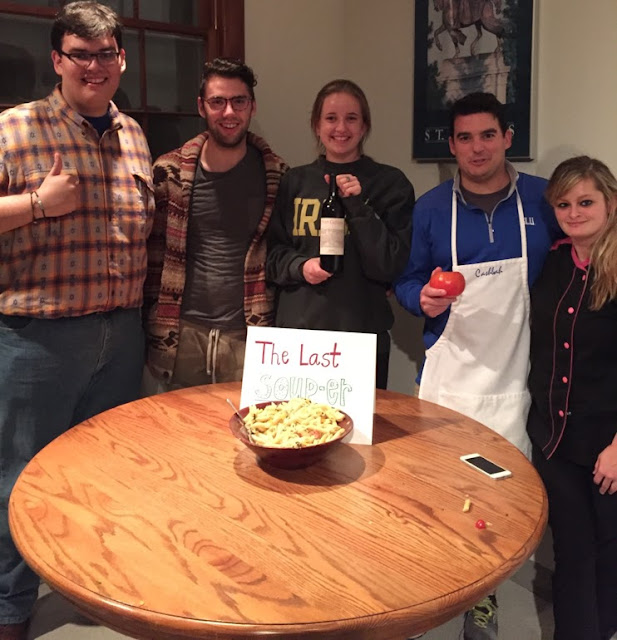
On the chilly night of Friday, November 18th tucked away in the hilly, woody terrain of Wildwood, Missouri there was a cooking competition worthy of Food Network fame occurring among 13 inventive Saint Louis University students. The 13 students are members of The Billiken Teacher Corps, whom are individuals completing graduate coursework while simultaneously working as volunteer teachers in Catholic schools around the St. Louis metro area. As part of an organized weekend retreat, Friday was designated as a food-focused day. 

Culinary Battle Begins

The morning began with the group splitting up into teams of four to participate in a food scavenger hunt at Soulard Market. Teams were presented with the task to retrieve the list of produce and pantry staples to be used for the cooking competition. As darkness fell, a Chef host arrived to the Wildwood retreat location to begin the culinary fun. With the four groups gathered around the main kitchen table, the Chef announced the competition would be to create an innovative, tasty pasta entrée. The rules were to utilize at least two vegetables and one fresh herb. A series of games were set up in order to disperse ingredients in an organized fashion. To begin with, the groups were faced with the challenge of identifying herbs and spices using their sense of touch, taste, and smell. Equipped with paper and pens, the groups recorded their best guesses for the five herbs and spices including basil, oregano, parsley, dill, and cayenne. The winner of the first round had priority selection on pasta shape and a selection of meat. Next, the groups were faced with a blind taste test with the challenge listing five ingredients in a spinach-kale dip. Winners of this competition had priority in selecting which cheese to use with options ranging from smoked gouda, ricotta, parmesan, and brie. Finally, small trivia questions were asked to determine group order for produce selection. Armed with an arsenal of pasta, cheese, meat, and fresh produce, the student teachers began flexing their competitive chef muscles, eager to create culinary masterpieces. 


The Heat Rises

With the ring of the bell, the groups sprinted around the kitchen to gather cooking equipment and tools. Sights around the culinary arena included whisks whipping, wooden spoons twirling, and chef knifes rocking along wooden cutting boards. Sounds included sauté pans sizzling, sheet pans clanging, and pasta water splashing. Aromas included smells of garlic roasting, onions caramelizing, beef sautéing, and herbaceous sauces reducing. After 90 minutes of the heated pasta battle, all cook soldiers made it out of the battlefield injury free, minus one reported trivial burn incident. 

Delicious Demise

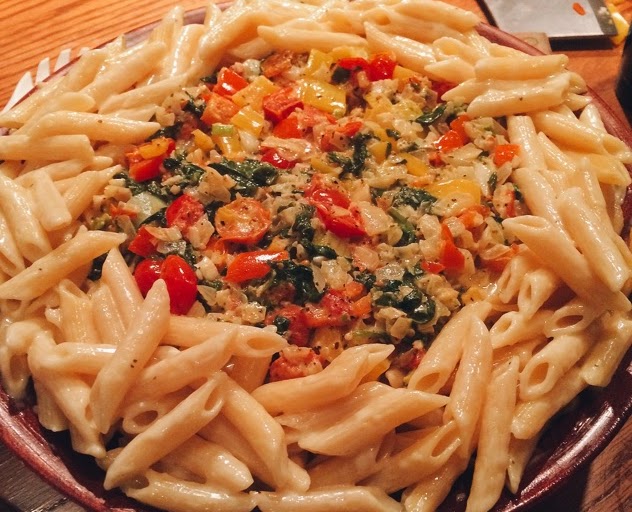
By the end of the showdown, all groups presented with pasta entrees certain to be Gordan Ramsey approved. Provided with such noteworthy culinary creations from each group, selecting a winning team was a challenging task. Overall, one team shined brighter than the rest with their tenderly cooked penne pasta, dowsed in a succulent brie sauce, sprinkled with a colorful medley of bell peppers, tomatoes, and spinach, scented with flavorful notes of fresh basil and sautéed garlic. This team, with the title “The Last Souper”, earned the first place bragging rights accompanied with a satisfying bottle of red wine as a prize. 


Carbohydrate Loaded Conclusions

By the end of the competition, the group of confident teachers had their own dose of reality of feeling what it’s like to be an apprehensive student with a blank slate. Thrown out of their comfort zone based on a traditional classroom environment and into the fire filled kitchen, the group demonstrated superior team work through collaboration and execution of the final entrees. All in all, this culinary adventure acted as a bridge to help all of The Billiken Teacher Corps members bond and develop professionally in the most delicious manner. 


Wheat Winners of Wine


Monday, December 12, 2016

Falling into Foodservice 
By Isabella Cova

Going into the internship, I had a pretty good feeling that Foodservice was not for me, but then… I ended up at Parkway! As a 2012 Parkway North Alum, returning to the Parkway School District for a five-week rotation, sounded absolutely thrilling! Now having been there for three of those five weeks, I have realized that there was a LOT about the place that I called home for four years that I did not know about.


The First Day 

On my first day at Parkway, I visited 28 schools in the North and South region of the school district. That made for an impressive first day, not only because I had never been to 28 schools in a single day, but because each school was so different. I was blown away by the nurse at Oak Brook Elementary School, who was growing column gardens of lettuce in the school cafeteria. Each day she would talk to the children about the lettuce and harvest it in front of them. Upon harvesting, she would add the lettuce to the school salad bar and the outcome was incredible! Elementary school students were going up to the salad bar three times in a single lunch period to fill their plates with more salad. So, to all the doubters out there who believe that getting a child to eat something green is impossible...look no further than Parkway. As a Nutrition and Dietetics Intern and Graduate School Student, I have heard time and time again about the importance of Nutrition Education, but seeing the impacts first-hand inspired me to new limits. The same nurse at this Parkway Elementary School who had become a hero for the salad bar at her school, also became the champion of breakfast sales. After working on a grant to receive equipment and supplies to make smoothies for breakfast, this nurse increased her breakfast sales threefold. Anyone who works in Foodservice in a school district knows that increasing breakfast sales is extremely difficult because as data from surveys show, getting breakfast into children can be a struggle. However, students at Oak Brook were coming in every morning for their smoothies and they were loving them! To me, this was evidence that serving students healthy food does work and when done correctly, the students and school district both win.

Learning the Ropes in Production 

 Apart from visiting the elementary and middle schools, I have spent the majority of my time rotating between Parkway’s four high schools: North, South, Central and West. The high schools are unique in that they serve as the production centers for the entire district. Parkway’s Foodservice operates off of a satellite school system. As a Nutrition and Dietetics Major, I have learned about the four types of foodservice production systems (commissary, conventional, cook-chill and assembly serve), but now I got to see the commissary production style in action. This means, that not only do the high schools prepare food for all of their students, they also prepare lunch and breakfast for the schools in their region. The high schools are responsible for serving anywhere from ten to four satellite schools. This type of production system leads to busy mornings and busy afternoons. From a high school student’s perspective all looks calm, cool and collected from the front of the kitchen. However, behind the scenes, inside the kitchen, food is being rushed to the carriers for the middle and elementary schools, lists are being checked item by item, staff members are running around getting last minute items and the cardio workout for the morning has begun. In the afternoon, after all the schools have finished their lunch, the remaining food and all the dirty pans and utensils get delivered back to the high school and clean up begins.

Time for a Parkway Surprise 

Not only is it amazing to think about how many students the Parkway District feeds each day, but with such a large foodservice production also comes an incredible amount of food waste. Parkway repurposes their food waste by composting. Composting is an environmental friendly and sustainable way of recycling food back into nutrients that can fertilize the soil to grow new crops and plant life. After lunch, food that cannot be reused from the elementary and middle schools gets returned to the high school and all the food waste gets dumped into the yellow composting bins that gets taken to Blue Sky’s Recycling where the food waste is used within the community to grow new foods. Forecasting each days’ needs becomes essential in trying to minimize food waste and food cost. In attempts to control food waste, before composting is considered, the production manager assesses the returned food to evaluate whether or not the food can be repurposed into another meal. If the quality of the food would be compromised or the food does not meet: appearance, taste or temperature standards, food is then recycled into compost. Besides food waste, Parkway has moved to using compostable trays rather than the traditional Styrofoam ones. Signage all throughout the cafeterias at the schools aims to educate the students about which bin their trash can be thrown into to help Parkway in its sustainability efforts. The schools offer landfill options along with recycling and composting options.

Eye Opener…Foodservice is More Than Numbers

For anyone exploring a passion in Dietetics, let me tell you, Foodservice is more than numbers and foodservice math. When I was applying for internships, I was open minded, but pretty sure foodservice was not for me. I enjoyed wearing my white lab coat and being perceived by the general public as a physician. I loved talking to patients and feeling important with all the medical terminology. I thought working in foodservice would be a bunch of number crunching to calculate edible portions, cost per serving, figuring budgets and percent variance, but it was NOT. Foodservice is a lot of marketing and advertising to get students excited about the food being served. It is a lot of meetings with vendors, bidders, production staff, foodservice directors from other school districts, parents and students. It is a lot of communicating through meetings, emails, handouts, phone calls and interactions with students and administration. It is a lot of planning ahead to make sure menus make sense both logically and nutritionally and that floor plans for new kitchen areas and serving spaces flow properly. It is a lot of papers from inventory sheets, to production sheets to budget reports and financial reports from each facility. It is a LOT of work, but it is also a lot of FUN, especially, if you are someone who has a passion for education, people, the future, nutrition and food.

Last Thoughts 

I could go on and on about my experience at Parkway. I could brag about all the wonderful people I have met or all that I have learned about managing and working in the Food and Nutrition Services Department. This opportunity to work in the district that helped me to be where I am today, was humbling and nothing short of a sweet blessing. During my time here at Parkway, I have learned that Foodservice in schools is where preventative medicine occurs. Health is fostered by the school environment through teachers, nurses, foodservice staff, parents, administration, students, local organizations offering grants, local sustainability companies and ultimately everyone who recognizes the importance and power of food and nutrition. The cafeteria is the heart of the school because it brings students together, it nurtures students in more ways than one. Food is more than the nutrients it provides. As a girl with an endless passion for Education and Nutrition, I have learned that this is where it all begins and to a certain extent, this is where it all began for me five years ago.

Tuesday, November 22, 2016

Butternut Squash Cheesecake Bars
By Kristen DeCesare, Dietetic Intern

Is Your Mouth Watering Yet?
Mine sure is! That’s how delicious these light and creamy bars were. Cheesecake has always been a favorite dessert of mine and I have yet to come across a kind that I don’t enjoy. Recently, I discovered this recipe by Ilona’s Passion, Ilona’s recipe, Butternut Squash Greek Yogurt Cheesecake Bars, and I fell in love! Her creation uses ingredients such as butternut squash puree, Greek yogurt cream cheese, and Greek yogurt. It was the first time that I have ever seen Greek yogurt cream cheese in a cheesecake recipe and I had to test it out for myself. I decided to switch up a few ingredients and see how this would all would work because it seemed too good to be true.

The Season is the Reason
This fall season I became so drawn to butternut squash. It was on sale EVERYWHERE, how could I resist? There’s so many benefits to buying seasonal produce. The cost is lower because there’s such an abundance of the product, the flavor is improved because the product can grow and ripen properly, the nutritional value is higher, and it is more environmentally friendly.(1) Butternut squash has a naturally sweet flavor with a decadent, buttery, orange flesh. It belongs to the Cucurbita moschata species along with pumpkin, cucumber, and courgette(2). It’s rich in beta carotene, vitamin A, vitamin C, potassium and magnesium. In Missouri, butternut squash in season anywhere from July to December. Get em’ before they’re gone!

Recipe Notes
Believe it or not, one of these bars packs less than 200 calories, crazy, right? They are also low in total fat, specifically, only 8 grams for one serving. Thanks to the butternut squash, the vitamin A content was 66 micrograms. The sugar content was also a total of 13 grams. For this recipe, I switched out refined white sugar for organic cane sugar. It’s much less processed than white sugar and has the succulent taste of sugarcane along with some of the nutrients that are found in cane juice(3). For the crust, I added 1% milk to help bind the crust together. I also feel that a recipe can never have too much cinnamon so I increased the original amount by ½ teaspoon. I loved how this recipe featured Greek yogurt cream cheese, it was my first time trying it and I’m pleased to say that I was impressed. It packs nearly four times more protein and ½ the fat compared to regular cream cheese and has a slightly tangy flavor. This product was a great addition to the cheesecake because it helped make the texture so creamy and delicious.

Let’s Get to the Good Stuff, Shall We?
Let’s get to baking! Scroll below for some awesome pictures from my baking adventure. More detailed steps can be found in the recipe towards the end of this (awesome) blog.

Featured Steps:


Grab some parchment paper and get to work! Cut a piece that will fit inside your 8x8 pan. Get your ingredients ready to make the graham cracker crust.

This is that beautiful “sandy” texture you should be looking for. Look at the size of those tasty granules!
Once your crust is made, press it into the bottom of the parchment-paper lined pan. Make sure that it is evenly spread out.

While the crust is baking, combine the Greek yogurt cream cheese, Greek yogurt, and cane sugar together. Mix until combined. Add in the egg and mix again. Make sure to scrape your bowl! The mixture should look creamy before adding the remainder of the ingredients. If you feel that the batter is too lumpy, try pushing it through a strainer.
After adding and mixing the remaining ingredients, the cheesecake is ready to be baked. Make sure to check the center of the pan to check the doneness, it shouldn’t wiggle if you lightly shake the pan. The result of this creation are these decadent morsels. The butternut squash contributed to such a beautiful color and flavor of these bars, I had to keep myself from scarfing down the entire pan! 

Recipe:

Butternut Squash Cheesecake Bars
“Adapted from Butternut Squash Greek Yogurt Cheesecake Bars- Ilona’s Passion”. Recipe. Ilona. Ilona’s Passion. N.p., 7 Oct. 2016. Web. 20 November 2016.

A light, creamy seasonal treat to delight your taste buds this holiday season

Yield:
1, 8x8 pan
Serving Size: 1 bar                    Number of Servings: 12


Ingredients:
For the crust:
Graham cracker crumbs
Butter, unsalted, melted
Milk, 1%

For the cheesecake:
Greek yogurt cream cheese brick
Organic cane sugar
Greek yogurt, plain*
Egg, whole
Butternut squash puree*
Cornstarch
Cinnamon, ground
Nutmeg, ground
Vanilla extract
US Standard Quantities

1½ cups
¼ cup
2 teaspoons


8 oz. (1 brick)
1 cup
1 cup
1 each
½ cup
1 teaspoon
1½ teaspoons
1/8 teaspoon
1 teaspoon

Method of Preparation:

  1. Gather all ingredients and equipment.
  2. Preheat the oven to 300°F. Place parchment paper on the bottom of your 8x8 baking pan.
  3. In a medium bowl, combine the graham cracker crumbs, melted butter, and milk. Mix together until a “sandy texture” is achieved. Press the mixture into the bottom of the pan and bake for 15-20 minutes until fragrant. Remove and set aside.
  4. While the crust is baking, prepare your cheesecake in a standard mixer fitted with a paddle attachment. Combine the cream cheese, cane sugar, and Greek yogurt. Mix on medium speed until there are no lumps.
  5. Scrape down the sides of the bowl with a spatula. Add in the egg and mix on medium speed until fully incorporated. Scrape down the sides of the bowl again.
  6. Add in the butternut squash puree, cornstarch, cinnamon, nutmeg, and vanilla extract. Mix until well combined. Pour the mix into the pan with the pre-baked graham cracker crust and bake for 30 minutes or until the center of the pan does not jiggle.
  7. Let cool 30 minutes to 1 hour before cutting into 12 portions, serve and enjoy! Store any remains in an airtight container for up to 7 days.


*Chef’s Notes: You will need just a little over 1 container of plain Greek yogurt to measure out 1 full cup. For this recipe, you can make the butternut squash puree ahead of time by cutting the butternut squash into halves and placing them cut side down on a baking sheet lined with foil. Roast them for 30-40 minutes at 375°F until they are fork tender. Scoop out the innards and mash with a potato masher or puree with a food processor. Store in an airtight container in the fridge for up to 7 days.

Nutritional Analysis: Per serving

Calories
176
Carbohydrates:
21 g
Folate:
5 mcg
Total Fat:
8 g
Fiber:
0 g
Calcium:
57 mg
Saturated Fat:
4 g
Cholesterol:
35 mg
Iron:
0 mg
Protein:
5 g
Vitamin B-12
.02 mcg
Sodium:
170 mg
Mono Fat:
1.8 g
Vitamin A
66 mcg
Sugar
13 g

______________________________________________________________________________
Sweet Endings
I hope that you enjoyed this recipe as much as I did! It would be a great addition to a Thanksgiving feast, or just for when you’re feeling like indulging in something oh-so sweet and delicious. 
Happy Eating!

________________________________________________________________________________

Resources:

[1]6 Benefits of Eating Seasonal Produce | Reboot With Joe. (2016). Retrieved November 21, 2016, from http://www.rebootwithjoe.com/benefits-of-eating-seasonally/

[1] "Butternut Squash Nutrition Facts and Health Benefits." Nutrition And You.com. N.p., n.d. Web. 21 Nov. 2016. <http://www.nutrition-and-you.com/butternut-squash.html>.

[1] "Organic Cane Sugar vs Other Sweeteners: How They Measure Up, Part 1 | SmartyPants Vitamins." SmartyPants Vitamins. N.p., 17 June 2016. Web. 21 Nov. 2016. <https://smartypantsvitamins.com/organic-cane-sugar-vs-other-sweeteners-how-they-measure-up-part-1/>.